Best Mobile Internet Options for Thailand Travel 2026
6/26/2026
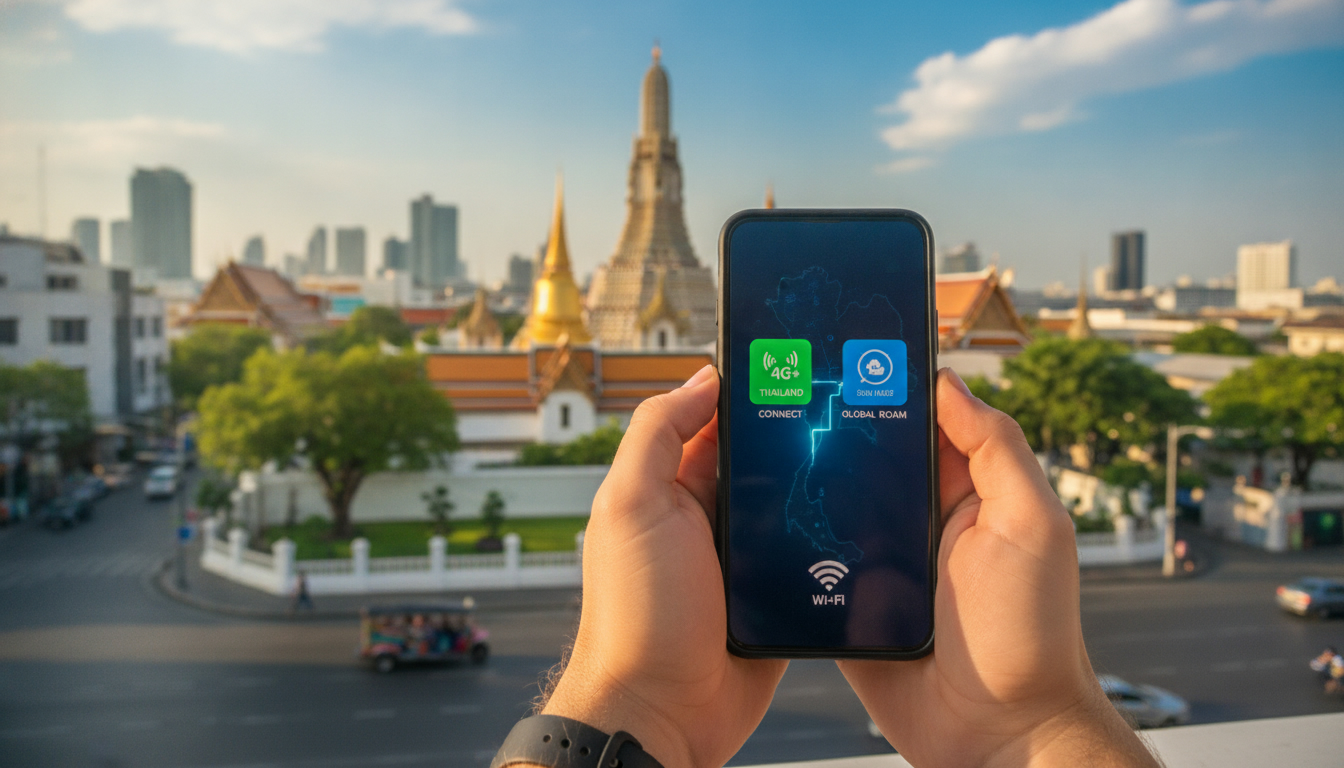
In short, what you'll discover in this article: Explore everything about internet mobile Thailand — from the fastest providers and best data plans to buying tips and coverage insights. Stay connected effortlessly during your trip with expert advice and practical comparisons.
1. Overview of Mobile Internet in Thailand
Thailand offers a robust mobile internet infrastructure, blending widespread 4G availability with rapidly expanding 5G networks. Travelers can expect reliable connectivity in urban centers and popular tourist destinations, making navigation, communication, and streaming seamless throughout their stay.
1.1 Current State — 4G vs 5G, Average Speeds, and Coverage
The country’s mobile internet landscape is dominated by advanced 4G LTE networks, with 5G rolling out quickly in major cities like Bangkok, Chiang Mai, and Phuket. Average download speeds for 4G range between 20-50 Mbps, while 5G can reach up to several hundred Mbps in optimal conditions.
Coverage is excellent in urban areas but may vary in remote or rural regions.
1.2 Main Operators (AIS, dtac, TrueMove H) — Market Share and Features
Thailand’s top three mobile carriers are AIS, dtac, and TrueMove H:
- AIS leads with the largest network coverage and fastest 5G speeds.
- TrueMove H offers competitive pricing and strong customer service.
- dtac focuses on affordable plans with solid urban coverage.
Each operator has unique strengths catering to different traveler needs, from high-speed data to budget-friendly packages.
2. Options for Travelers — Prepaid SIM and eSIM
Travelers have flexible options to access mobile internet: traditional prepaid SIM cards or the increasingly popular eSIM technology.
2.1 Where to Buy (Airport, Shops, Online) and Required Documents
You can purchase prepaid SIM cards at major airports (BKK, DMK, CNX, HKT), local convenience stores, or online before arrival. Buying an eSIM online offers instant activation without physical cards.
A valid passport is typically required for registration due to Thai regulations.
2.2 Examples of Tourist Packages (Price, Data, Validity)
Tourist SIM plans generally include:
- Data allowances from 5GB up to unlimited
- Validity periods ranging from 7 to 30 days
- Prices starting around $10-$20 USD depending on data volume
These packages are designed for short-term visitors needing reliable internet without long-term commitments.
2.3 Step-by-Step Activation for Physical SIM and eSIM
Activating a physical SIM involves inserting the card and following carrier instructions via SMS or app. For eSIMs:
- Purchase online from a trusted provider.
- Scan the QR code sent via email.
- Follow device prompts to install the eSIM profile.
- Select the new mobile plan in your phone’s settings.
This process ensures quick setup so you stay connected immediately upon arrival.
3. Plans for Residents and Long-Term Stays
For longer stays or residents, postpaid subscriptions offer more flexibility but require additional documentation such as a work permit or residence certificate.
3.1 Postpaid vs Prepaid Subscriptions and Documentation
Postpaid plans provide larger data packages and bundled services but involve credit checks and contracts. Prepaid remains popular for its simplicity and no commitment.
3.2 Portability, Cancellation, and Combined Fiber/Mobile Offers
Operators support number portability between plans. Cancellation policies vary but are generally straightforward for prepaid users.
Some carriers bundle fiber internet with mobile plans for residents seeking home connectivity.
4. Regional Coverage and Urban vs Rural Differences
Coverage quality differs significantly between bustling cities and remote areas.
4.1 Bangkok and Major Cities — Best Performance
In Bangkok, Chiang Mai, Pattaya, and other large cities, expect fast speeds with near-complete coverage on all major networks.
4.2 Islands and Rural Areas — Tips and Coverage Limits
Islands like Koh Samui or Krabi have good coverage but may experience slower speeds or spotty service in less populated zones. Travelers should check specific carrier maps before relying on mobile internet in these areas.
5. Practical Comparison of Operators
Choosing the right provider depends on price, data volume, validity period, roaming options, and customer support quality.
5.1 Price, Data Amounts, Validity, Roaming & Customer Support
| Operator | Price Range (USD) | Data Volume | Validity | Roaming Options | Customer Support |
|---|---|---|---|---|---|
| AIS | $10 - $30 | Up to unlimited | 7 - 30 days | Extensive | Strong |
| TrueMove H | $8 - $25 | Moderate to unlimited | 7 - 30 days | Good | Responsive |
| dtac | $7 - $20 | Moderate | 7 - 30 days | Limited | Decent |
5.2 Recommended Summary Table for Readers
This table helps travelers quickly compare key features when selecting a plan suited to their trip length and data needs.
6. Tips and Best Practices for Using Mobile Internet
Maximize your mobile internet experience with these practical tips:
6.1 Test Speed and Choose a Plan Suitable for Streaming, Maps & Work
Before committing to a plan, test network speed using apps like Speedtest to ensure it meets your usage requirements—whether streaming videos or navigating maps.
6.2 Manage Data Consumption and Extension Options
Monitor your data usage regularly; most carriers offer easy top-up options via apps or SMS if you run low during your trip.
6.3 Security (VPNs, Public Networks & APN Settings)
Protect your privacy by using a VPN on public Wi-Fi networks and configuring APN settings correctly when activating your SIM or eSIM.
7. Roaming and Alternatives (Pocket Wi-Fi, International eSIMs)
Travelers should weigh roaming costs against local options like pocket Wi-Fi devices or international eSIMs offering global coverage.
7.1 Roaming Costs vs Buying Local SIMs
Roaming often incurs high fees; purchasing a local SIM or eSIM is usually more economical for extended stays in Thailand.
7.2 When to Prefer Pocket Wi-Fi or Global eSIMs
Pocket Wi-Fi suits groups sharing one connection; global eSIMs benefit multi-country travelers who want seamless switching without swapping cards.
8. Typical Costs and Concrete Examples (Traveler Scenarios)
Understanding typical expenses helps plan your budget effectively.
8.1 Example 1 — Short Stay (3–7 Days): Best Choice
A prepaid tourist SIM with around 10GB valid for one week typically costs about $10-$15 USD—ideal for casual browsing and social media sharing.
8.2 Example 2 — Long Stay/Digital Nomad: Economical Options
Longer stays benefit from monthly unlimited data plans priced between $20-$30 USD with AIS or TrueMove H for consistent high-speed access suitable for remote work.
10. Updates and Sources (Information Date & Speed Tests)
This guide reflects information accurate as of early 2026 based on recent speed tests conducted in Bangkok and tourist hotspots across Thailand.
10.1 How & When to Update This Article for Relevance
Regular updates every six months ensure coverage of new plans, pricing changes, network expansions, and evolving traveler needs remain current.
Which provider fits the route you will actually travel?
The strongest option depends on the itinerary rather than a single national ranking. For a city-only stay in Bangkok, Chiang Mai, Pattaya, or Phuket, compare the current full-speed allowance, validity, hotspot rules, and activation process.
For a trip crossing several provinces, broad route coverage becomes more important than the highest speed measured in one downtown location.
A practical comparison should follow the conditions you will encounter:
- For major cities, choose the package whose validity covers the entire stay and whose high-speed allowance matches your use.
- For long road or rail journeys, check coverage along the route and download offline maps before departure.
- For island hopping, remember that reception at a ferry terminal does not guarantee reception offshore or behind an island’s central ridge.
- For remote work, test upload speed and latency at the accommodation instead of relying only on a download-speed result.
Here is the field mechanism behind that advice: when a bus or train moves between network cells, the phone must hand its connection from one tower to another. If roadside coverage is marginal, those repeated handovers cause brief interruptions even when the departure and arrival cities both have excellent service.
The consequence is most noticeable during live calls, large uploads, and payment verification.
How can you avoid setup and roaming problems on arrival?
Install an eSIM before departure while you still have dependable Wi-Fi, but keep the travel line disabled until the provider says it should be activated. Save the setup instructions and APN details offline.
After landing, select the travel line for cellular data and enable data roaming only when the eSIM provider specifically requires it.
If the phone shows signal but no internet access, check the selected data line first, toggle airplane mode, restart the device, confirm that the package is active, and inspect the APN only after those steps. This order prevents a common problem: manually replacing a correct APN when the real cause was that the home SIM remained selected for data.
Dual-SIM phones require one more check. When automatic cellular-data switching is enabled, the handset can return to the home SIM if the Thai line briefly loses reception inside a lift, tunnel, or concrete building.
That mechanism can create roaming charges; locking data to the Thai SIM or eSIM prevents the fallback while still allowing the home line to receive essential SMS messages.
Package wording also deserves attention. When an offer is described as “unlimited,” verify whether it provides unlimited full-speed data or reduces the speed after a stated allowance.
Once throttling starts, messaging and basic maps may continue to work while video calls, hotspot use, and cloud backups become difficult. The limit, not the headline label, determines whether the plan suits a working trip.
For more detailed insights on purchasing an eSIM in Thailand or comparing prices of various plans tailored specifically for tourists visiting Thailand see this comprehensive guide. It complements this overview by helping travelers make informed decisions before their trip begins.
By following these recommendations on internet mobile Thailand, you can enjoy uninterrupted connectivity throughout your journey—whether exploring vibrant cities or relaxing on tropical islands—without worrying about unexpected costs or poor coverage source.
FAQ
How do I buy a prepaid SIM card in Thailand?
You can buy prepaid SIM cards at airports, convenience stores, or online before arrival. A valid passport is required for registration. Activation is simple and usually involves following carrier instructions via SMS or app.
What are the main differences between AIS, dtac, and TrueMove H?
AIS offers the largest coverage and fastest 5G speeds, TrueMove H provides competitive pricing and strong customer service, while dtac focuses on affordable plans with solid urban coverage. Each caters to different traveler needs.
Is eSIM a good option for travelers in Thailand?
Yes, eSIMs offer instant activation without physical cards and can be purchased online. They are convenient for travelers who want quick setup and flexibility without visiting stores.
How reliable is mobile internet coverage outside major cities?
Coverage is excellent in cities like Bangkok and Chiang Mai but may be slower or spotty on islands and rural areas. Checking carrier coverage maps before traveling to remote locations is recommended.
What should I consider when choosing a data plan for my trip?
Consider your data needs, plan validity, price, and roaming options. Testing network speed beforehand and monitoring data usage helps ensure you pick a plan suitable for streaming, navigation, or work.

Noah Bennett
Noah is a Southeast Asia travel writer. At Thailand eSIM he compares AIS, TrueMove H and dtac data plans from Bangkok to the islands.